Rhea Damani Profile
Interviewed by Amarys Dejai
Bold Moves and Big Screens: Producer Rhea Damani’s Journey into Hollywood
Independent film-making is often defined by its constraints. However, despite these challenges, there are members and workers who are admirably devoted to the craft of film, in all of its moving parts. One among these is LA-based film producer Rhea Damani, who wears a variety of hats—from accountant to creative anchor. Rhea dedicates herself to "safeguarding" the heart of a story.
Born and raised in Kolkata, India, Rhea’s journey to Hollywood was not born from an epiphany. Instead, her path was paved by what she calls “small pockets of moments” throughout her childhood. She recalled that her first glimpse into the mechanics on screen came from a behind-the-scenes book of the making of the Diary of a Wimpy Kid movie. For a child who felt she "was truly never academically strong," learning how locations were scouted and discovering that prop food was entirely inedible felt like uncovering a secret language. "There was that moment where I was like, wait, this is so intriguing," said Rhea, "I don’t just want to learn about this out of curiosity; I want to be a part of it somehow."
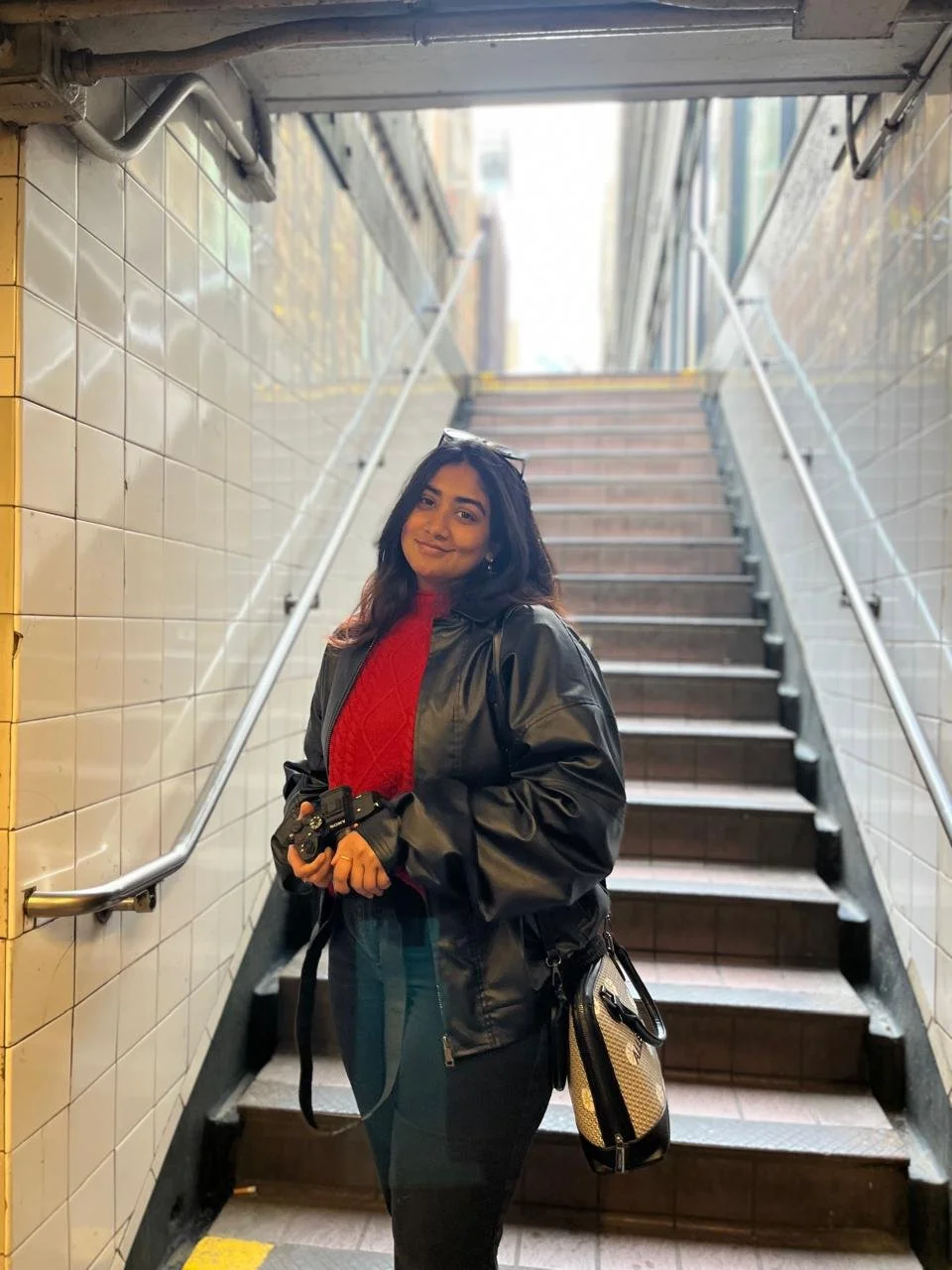
Rhea Damani
Photo: Alyssa Tranbarger (@alyssatranbargerphoto)
HMUA: Nahla Simone (black-lotus.studio)
She was fortunate enough to have parents who supported her early creative projects. This impactful creative support provided her the foundation to transform her curiosity into an achievable future. At fifteen, she shot an unofficial music video for a Selena Gomez track. When the project took second place in an all-India school competition, the fantasy of film-making transformed into something tangible. "That was the moment where I was like, wait, maybe there is something real here. Let me actually start making more meaningful stuff."
Rhea’s desire eventually led her to Los Angeles in the Fall of 2023 to pursue an MFA in Film and Television Producing at Chapman University. Though she had initially operated as a cinematographer during her undergraduate studies at Whistling Woods International in Mumbai, India, she felt a desire to change gears. In the industry, cinematography can often feel transactional. There is a cycle of entering a set, executing a visual style, and leaving. "That just wasn’t enough for me," Rhea explained. "I wanted to be a part of the whole process. I wanted to see a project grow from ideation to execution." So, she made a shift.
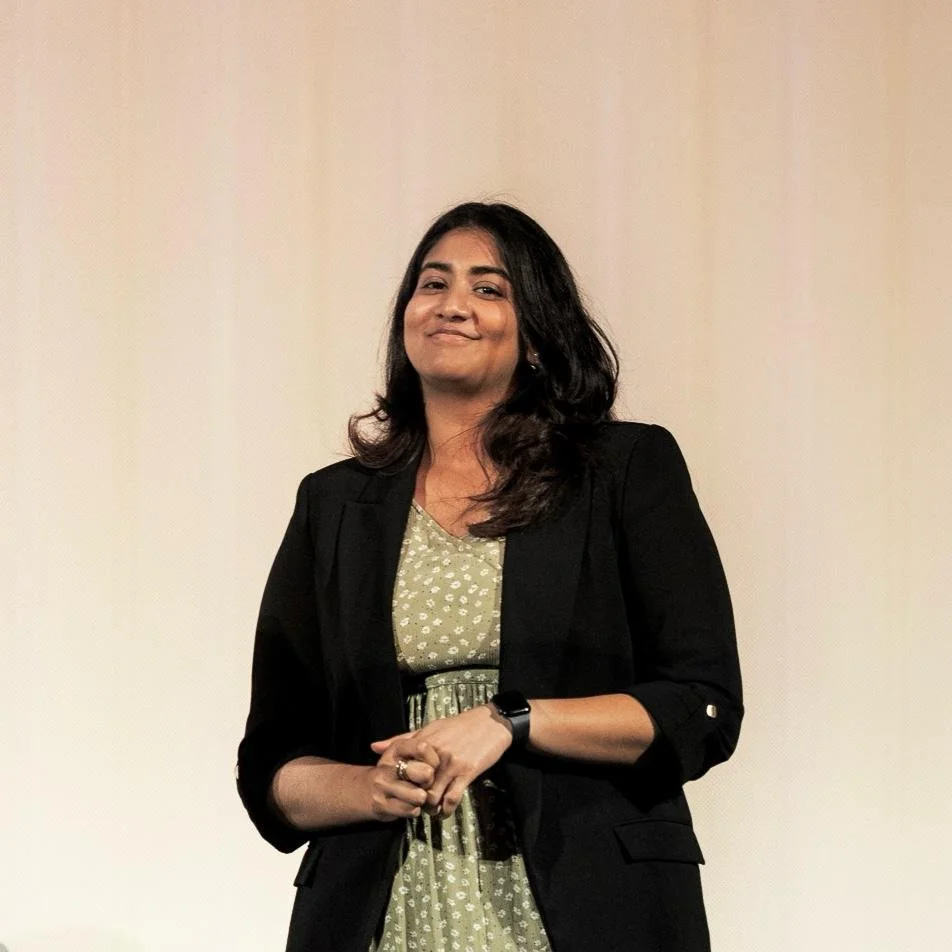
While at Chapman, she produced Summer Wedding, an emotionally heavy short film exploring cultural taboos and premarital pregnancy. Collaborating closely with writer Maria Magierowska and director Ting-Li Tsai, Rhea established her signature ethos: operating not merely as a line producer tracking spreadsheets, but as a creative anchor. "As a producer, I didn’t feel like I was just doing budgeting, accounting, and permits. I wasn’t just sitting in front of a laptop," she noted, "but actually having conversations about the story. That’s my absolute favorite part of producing." That devotion has carried into her post-graduate career, with her recent short Talented winning Best Narrative Short at the Berlin Women Cinema Festival, and her work on 1020 gaining traction as a vital TV proof-of-concept.
To produce an independent film is to constantly juggle the business with the heart. On lower-budget sets, crews are frequently operating on raw vulnerability. However, under the grueling physical and financial pressures of indie production, it is easy for directors and writers to lose their footing. Rhea told me about how she often notices crew members start to "take a few steps back from the very reason they started." This is the moment she sees her role as being the most critical. Rhea steps in to act as the project's moral and creative compass, gently stopping production to re-align the team, asking them: "Are we making it just because you want it to look a certain way for a big festival, or because there is a story here that you wouldn’t otherwise be able to tell?"
In her work, her priority is to remind her collaborators that the work is their calling card; their work must leave themselves and the audience feeling fundamentally changed. To hold emotional space requires an immense amount of personal fortitude. This is a boundary Rhea had to obtain through rigorous trial and error. In an industry that is constantly demanding of its members, Rhea said she used to "always like work first, which is not healthy." To protect her own peace, Rhea has since adopted a routine of daily rituals: twenty minutes of absolute silence and tea each morning before looking at a screen, a “somewhat strict” 11:00 PM boundary around her sleep, and a refusal to get lost in the curated anxieties of social media. She operates under the grounded assumption that over-exerting oneself for the sake of an urgent email is a false economy. The work, she noted, is never that deep. "You’ll get it done. It’ll get done."
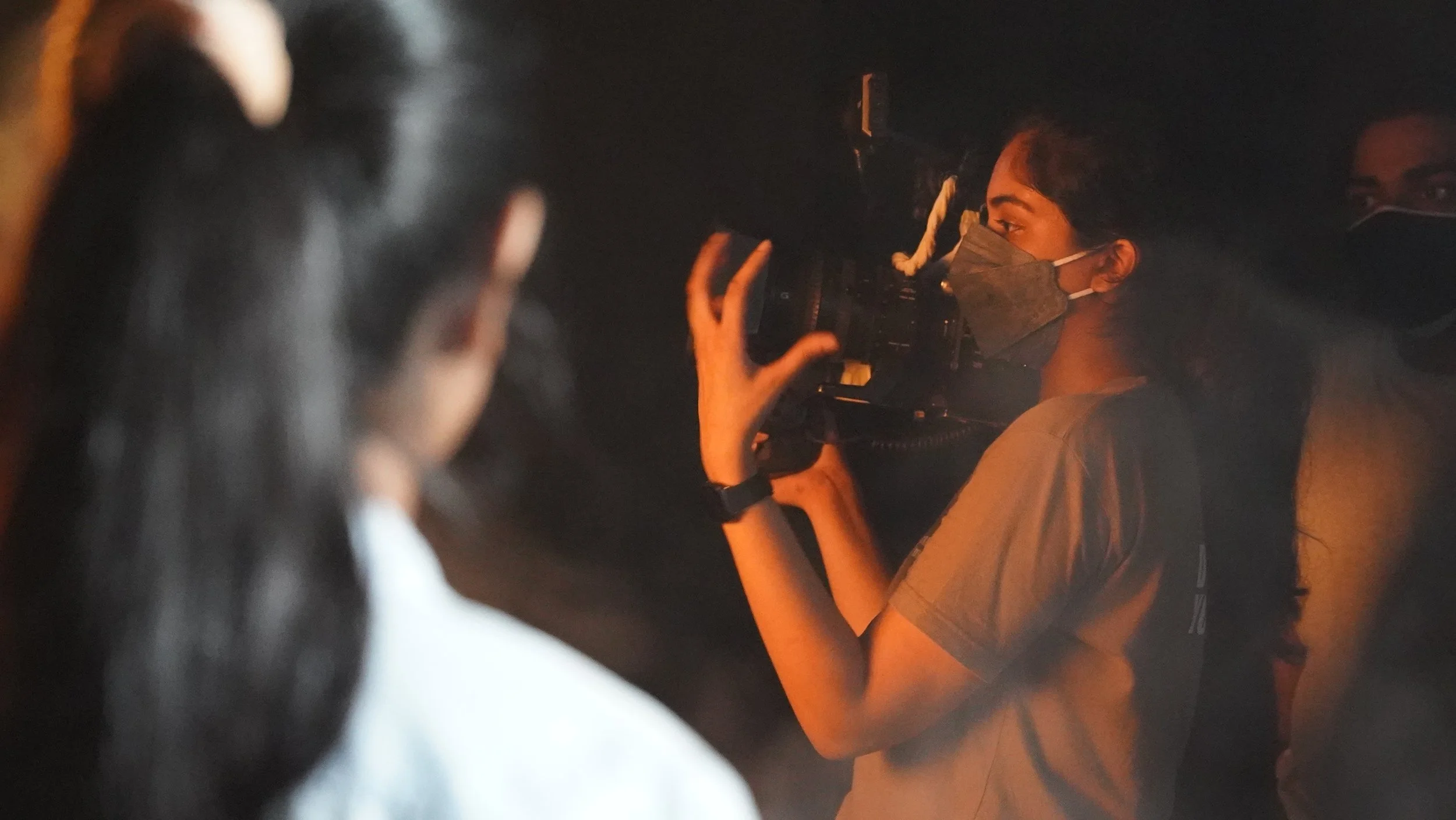
That resilience enabled her to make it to Los Angeles with no existing network, and build a community. Paving her own way meant leaning heavily into the power of the cold email—reaching out to industry figures with a simple request: "You don't know me, but I know your work. If I could get ten minutes of your time…” It was Rhea’s persistence that led her to connect with line producers actively working in the industry, and it was through these cold emails that she also found her current producing mentor.
Rhea’s upcoming summer reflects her continued commitment to heavy and socially charged narratives. She is currently balancing three short films: Merry Melody, which explores an unexpected bond between a young girl and an unhoused, disabled violinist; Spirit Box, a psychological supernatural-family drama dealing with grief; and ,TEN, an intense look at a father’s emotional outburst on a commercial soundstage while recording a gun-violence PSA to remind people that "these kids aren't just statistics." Alongside these achievements, Rhea is expanding her reach into long-form content as she develops a mini-series with Maha Qadri, Riya Saxena and Darith Beng.
In a Hollywood landscape that often prioritizes scale over substance, Rhea remains a reminder of what independent cinema looks like when protected by those who refuse to let the business overshadow the soul of the story. Her advice to the next generation of film-makers is uncompromising: "Put yourself out there, your voices deserve to be heard, your stories deserve to be heard, and just don’t be afraid to ask for help."